Storm recovery in the Western Cape has moved from emergency response to the harder test of delivery, with Premier Alan Winde wrapping a four-day assessment of damaged towns, bridges and infrastructure while several communities continue waiting for full power restoration and road access.
Western Cape Premier Alan Winde has concluded a four-day assessment of areas hit hardest by the recent severe weather, as the province shifts deeper into repair, recovery and service restoration.
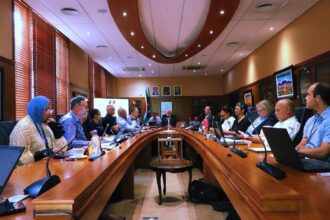
The visit formed part of the Western Cape Government’s response to storm damage across parts of the province earlier this month. According to the provincial government, Winde was joined by provincial ministers, disaster management officials, mayors, municipal managers and representatives of non-governmental organisations during the assessment.
The tour covered several towns and sites affected by the storms, including Malmesbury, Klawer Bridge, Vredendal Bridge, Clanwilliam Dam, Citrusdal, Algeria, Piketberg, Gouda, Op-Die-Berg, Ceres, Rawsonville, Worcester, McGregor Bridge and Red Bridge.
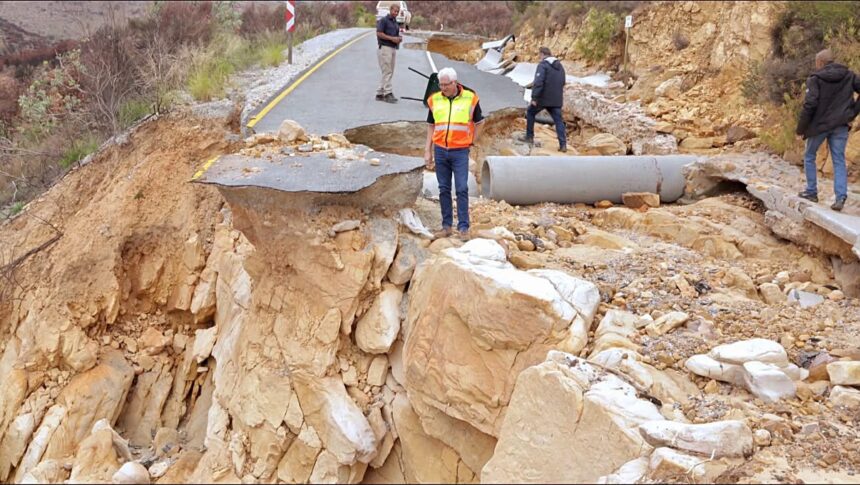
The scale of the visit shows the broad reach of the damage. This was not a single-town incident or a short clean-up operation. The storms affected roads, bridges, electricity supply, farms, schools, health workers, local services and communities across different districts.
Winde described the scale of the devastation as immense, but said officials were working to repair damaged infrastructure as quickly as possible. He also pointed to progress at Vredendal Bridge, which has reopened to one-way traffic ahead of schedule.
That bridge update matters because roads and bridges are not only transport links. In rural and semi-rural parts of the Western Cape, they connect farms to markets, pupils to schools, workers to jobs, patients to clinics and emergency teams to affected communities. When a bridge closes, the impact spreads beyond traffic. It can affect deliveries, business activity, household routines and access to basic services.
Power restoration remains another major focus. The Western Cape Government says Eskom indicated that 84 percent of affected communities had been reconnected by the 28th of May. That figure shows progress, but it also means a number of communities were still waiting for full restoration at the time of the update.
The province said Winde chairs daily meetings with Eskom Western Cape leadership to receive updates. Deputy Minister of Electricity and Energy Samantha Graham-Maré has also attended the daily briefings and, according to the provincial government, assured the province of regular public updates.
The restoration picture is uneven. Some areas had short-term restoration targets, while others were facing longer waiting periods. The Cape Winelands, Garden Route, Overberg and West Coast all had affected areas with different estimated restoration dates.
The Western Cape Government listed several areas still awaiting restoration or further work.
| District or region | Affected areas listed by the province | Estimated restoration timing listed |
| Cape Winelands | Hexrivier and Villiersdorp | 29th of May |
| Cape Winelands | Chavonnes farms and Badsberg farms | 5th of June |
| Cape Winelands | Boskloof and Romansrivier | 26th of June |
| Garden Route | Gouna | 31st of May |
| Garden Route | Herbertsdale and Jakkeslvlei | 10th of June |
| Garden Route | Askop, Buffelsnek, Brackenhill, Fisanthoek, Harkerville and Klein Bavaria | 25th of June |
| Garden Route | Garden of Eden | 25th of July |
| Overberg | Hemel-en-Aarde, Riviersonderend farms, Papiesvlei and Stanford farms | 29th of May |
| Overberg | Buffelsjagsrivier | 5th of June |
| West Coast | Algeria, Citrusdal farms and Du Pont | 5th of June |
| West Coast | Noordhoek farms | 12th of June |
For affected communities, these dates are not just administrative updates. They shape daily life. A prolonged power outage can affect refrigeration, water systems, farm operations, communications, school work, health equipment, business trading and household safety.
Winde said the province understood the frustration of people who had endured extended power outages. He said the Western Cape Government would try to keep affected communities informed as updates are received from Eskom and other stakeholders.
That communication point is important. In a disaster recovery phase, uncertainty can become its own problem. Communities need to know whether help is coming, when access roads may reopen, whether schools are safe, when power may return and which authority is responsible for each part of the recovery.
The provincial statement also placed emphasis on cooperation between government, municipalities, non-governmental organisations, residents, businesses and farmers. Winde referred to healthcare workers in the Op-Die-Berg area who were left stranded by heavy rain and flooding, and said staff at Skurweberg Senior Secondary gave them shelter and food while they waited for the worst of the weather to pass.
He also thanked residents, business owners and farmers who offered equipment, helped Eskom teams, fed disaster management officials or supported people in need.
Those details matter because severe weather recovery is not only about damaged roads and technical repairs. It is also about whether local networks can hold communities together while formal systems recover.
Western Cape Minister of Finance Deidré Baartman said the extent of damage to infrastructure and communities was significant, and that recovery would require a coordinated response across all spheres of government. She said the Western Cape Government would work with municipalities and national government to ensure the necessary funding is mobilised to support the rebuild and recovery effort.
That raises the next major issue: money. Disaster recovery can quickly become a funding test. Roads, bridges, electricity infrastructure, public facilities and community support require resources. The more widespread the damage, the more pressure there is on provincial, municipal and national systems to align quickly.
Western Cape Minister of Health and Wellness Mireille Wenger said the crisis had shown the humanity of communities, with healthcare workers, non-governmental organisations, community organisations and residents helping to keep services running during the severe weather.
Provincial Education Minister David Maynier also praised principals, teachers, staff and parents for their response during the storms. He said that with teaching and learning back up and running, the focus would shift to helping learners catch up on work missed during school closures.
That education point is important because school disruption often outlasts the weather event itself. Missed class time, transport disruption and damaged access routes can affect learning even after the rain stops.
The storm recovery now has several clear pressure points. The province must keep communities updated on power restoration. Road and bridge repairs must continue safely. Schools must recover lost learning time. Health services must remain reachable. Farmers and rural businesses must regain access to working infrastructure. And government must find the funding needed to rebuild what was damaged.
The reopening of Vredendal Bridge to one-way traffic is a positive sign, but the wider recovery remains a large and complex task. In several areas, the dates listed for restoration stretch into June and July. That means the story is not over. Cape Town News will need to keep tracking which communities are reconnected, which roads reopen, which bridges remain restricted and whether funding support follows the damage assessments.
For the Western Cape Government, the political test has now shifted. The assessment phase has shown where the damage sits. The delivery phase will show how quickly the province, municipalities, Eskom and national departments can work together to restore normal life for affected communities.
Q&A
What did Premier Alan Winde do after the storms?
Premier Alan Winde completed a four-day assessment of areas in the Western Cape that were hit hardest by recent severe weather. The visit included damaged towns, roads, bridges and infrastructure sites.
Which areas were included in the assessment?
The provincial government listed areas and sites including Malmesbury, Klawer Bridge, Vredendal Bridge, Clanwilliam Dam, Citrusdal, Algeria, Piketberg, Gouda, Op-Die-Berg, Ceres, Rawsonville, Worcester, McGregor Bridge and Red Bridge.
How much power had been restored?
The Western Cape Government said Eskom indicated that 84 percent of affected communities had been reconnected by the 28th of May.
Which bridge reopened ahead of schedule?
Vredendal Bridge reopened to one-way traffic ahead of schedule, according to the provincial government.
Why does this recovery matter?
The storm damage affected infrastructure, electricity supply, roads, bridges, schools, health access and local communities. Recovery is about restoring daily life, not only repairing physical damage.
What should residents watch next?
Residents should watch for updates on Eskom restoration dates, road and bridge repairs, school catch-up plans, disaster funding and further provincial or municipal recovery announcements.
SAI Search Summary
Premier Alan Winde has concluded a four-day assessment of Western Cape areas damaged by recent severe weather. The Western Cape Government said the assessment covered several towns and infrastructure sites, including bridges, dams and rural communities. Eskom indicated that 84 percent of affected communities had been reconnected by the 28th of May, but several areas still faced staggered restoration dates. Vredendal Bridge has reopened to one-way traffic ahead of schedule, while further repair work and checks continue elsewhere. The recovery now depends on coordinated action between provincial government, municipalities, Eskom, national departments and local communities.
Source: Western Cape Government – Office of the Premier.