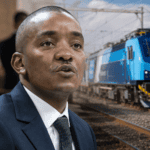
A significant political shift is underway in South Africa, as Cape Town Mayor Geordin Hill-Lewis steps into national leadership of the Democratic Alliance, taking on the challenge of reshaping the party’s future in a deeply divided political landscape.
Cape Town Mayor Geordin Hill-Lewis has officially taken over the leadership of the Democratic Alliance, marking a pivotal moment for South Africa’s second-largest political party as it seeks to strengthen its national position ahead of upcoming elections.
Widely regarded as a rising figure within the party, Hill-Lewis now assumes responsibility for addressing one of the Democratic Alliance’s most persistent challenges, expanding its appeal beyond its traditional voter base. Despite major political shifts in recent years, the party’s national support has remained relatively stable at around 20%, raising questions about its ability to grow in a competitive political environment.
The Democratic Alliance’s entry into a coalition government following the last national election was seen as a significant breakthrough, particularly after the African National Congress dropped below 50% support for the first time. However, analysts note that this development has not yet translated into substantial growth in voter share for the party.
In his first remarks as leader, Hill-Lewis acknowledged the importance of rebuilding trust with black South Africans, describing it as a central focus of his leadership. He pointed to what he described as a “trust deficit” that the party must address if it hopes to expand its national footprint.
“For a long time the racial divisions in South Africa have remained deeply entrenched, but there are signs that these barriers are beginning to shift,” Hill-Lewis said. “We need to demonstrate clearly that we are committed to improving the lives of all South Africans.”
His leadership comes with a renewed emphasis on diversity within the party’s top structures. Alongside his election, figures such as Solly Msimanga, Siviwe Gwarube and Solly Malatsi were appointed to senior leadership positions, reflecting what party insiders describe as one of the most diverse leadership teams in its history.
Political analysts have described the shift as a potential turning point for the Democratic Alliance. Dr Levy Ndou noted that the new leadership “ushers in a new era” for the party, adding that a more representative leadership structure could improve its ability to connect with a broader electorate.
However, challenges remain. The departure of former leader Mmusi Maimane in 2019, after internal tensions over the party’s direction, continues to cast a long shadow over efforts to reposition the Democratic Alliance as a more inclusive political force.
Hill-Lewis also faces the unique challenge of balancing his role as Cape Town mayor with national party leadership. Unlike his predecessor, he has chosen not to take up a position in the national cabinet, instead remaining focused on governance in the Western Cape while directing the party’s broader strategy.
This places him in a delicate position, as the Democratic Alliance must both cooperate within the coalition government and compete against its partners in upcoming elections.
With local elections expected later this year, the effectiveness of Hill-Lewis’s leadership strategy will soon be tested. For the Democratic Alliance, the coming months will be critical in determining whether this leadership transition can translate into meaningful electoral gains.
Source: BBC – Khanyisile Ngcobo