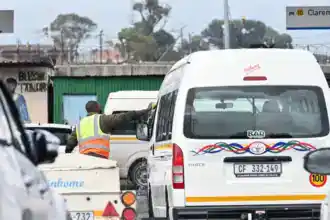
Cape Town commuters are facing renewed pressure from overcrowded trains and persistent delays, with thousands of workers and students affected by unreliable daily rail services. The disruption is not only a public transport issue. It also feeds into Cape Town’s wider traffic problem, as delayed or overcrowded trains push commuters toward taxis, buses and private cars, increasing travel costs and pressure on already busy roads.
Cape Town’s commuter rail problems are once again under the spotlight as thousands of passengers continue to face overcrowded trains, long platform waits and daily delays.
According to IOL, daily life for many Cape Town commuters is being severely disrupted by persistent train delays and extreme overcrowding. The report says unreliable rail services, packed carriages and long waits have left workers and students arriving late for work, school and other commitments.
The issue is more than an inconvenience. For many households, the daily commute determines whether people arrive at work on time, keep wages secure, reach school safely, or avoid extra transport costs. When trains run late or become too overcrowded to board comfortably, the effects spread beyond the rail network.
Cape Town’s transport system is deeply connected. A delay on a Metrorail line does not stay on the platform. It can push commuters into taxis, buses, lift clubs, e-hailing trips or private vehicles. That increases pressure on already busy roads and adds costs for people who may have planned their day around rail as the cheaper option.
The IOL report, written by Nokubonga Ndlovu, describes long waits and packed carriages as part of the daily struggle faced by rail users. Metrorail commuters have also been photographed queueing for alternative transport after trains were cancelled because of vandalism, showing how service disruption quickly becomes a wider commuter crisis.
For workers, the impact can be serious. A late train can mean a warning at work, lost wages, missed shifts, or strained relationships with employers who may not fully understand the transport difficulties faced by staff. For students, delays can mean missed classes, late arrivals at exams, or added stress before the school day even begins.
The pressure is especially hard on commuters who have few realistic alternatives. Many Cape Town households rely on public transport because private vehicles are too expensive to buy, maintain, fuel and insure. When the train system becomes unreliable, commuters may have no choice but to spend more money on taxis or buses, even when household budgets are already tight.
This is why commuter rail matters so much to Cape Town’s economy. A working rail system moves large numbers of people at lower cost. It reduces congestion, supports access to jobs and education, and gives lower-income households a more affordable way to travel across the city. When rail weakens, the whole transport network feels it.
The problem also affects businesses. Employers depend on staff arriving on time. Retail stores, offices, factories, schools, hospitals and service businesses all rely on predictable commuting patterns. If workers regularly arrive late because of transport breakdowns, the cost is carried by both employees and employers.
Cape Town’s rail system has been central to a broader political and infrastructure debate for years. The City of Cape Town has repeatedly pushed for greater control over passenger rail, arguing that local management could help improve service reliability over time. Passenger rail is currently operated by Metrorail, under the Passenger Rail Agency of South Africa.
Earlier reporting by Eyewitness News highlighted Mayor Geordin Hill-Lewis’s view that Cape Town cannot wait years for rail reform. He said commuters could face continued hardship without clear timelines for the devolution of rail functions. That debate matters because service reliability remains one of the biggest public transport issues facing the metro.
Rail devolution, however, is not a quick fix. Even if governance changes, the system still needs funding, maintenance, security, reliable rolling stock, station upgrades, signalling capacity and protection against vandalism and cable theft. Commuters need practical improvements they can feel now, not only long-term policy promises.
Safety is another major concern. Overcrowded platforms and trains can create risks for passengers, especially during peak travel periods. Packed carriages make it harder for commuters to move safely, protect personal belongings, assist elderly passengers, or respond quickly if something goes wrong. Long waits can also leave commuters exposed at stations for extended periods.
Vandalism remains one of the biggest threats to reliable service. When trains are cancelled because infrastructure is damaged, passengers often have to scramble for alternative transport. That creates sudden crowding at taxi ranks and bus stops, while also increasing the number of people trying to move at the same time on the same road corridors.
For Cape Town commuters, the daily question is simple: will the train arrive, will there be space, and will they reach their destination on time? Until that question can be answered with confidence, many passengers will continue to plan their lives around uncertainty.
The effects are also emotional. Commuters who wake up early, leave home in the dark, and still arrive late because of delays carry a daily burden. It affects stress levels, family time, childcare arrangements and personal safety. Transport failure is often measured in minutes, but for passengers it is experienced as lost time, lost money and lost control over the day.
Cape Town’s road congestion also cannot be solved without better public transport. If trains are unreliable, more commuters will turn to road-based alternatives. That means more vehicles on key routes, longer travel times and greater pressure on buses and minibus taxis. In a growing city, rail remains one of the few systems capable of moving large numbers of people efficiently.
The immediate advice for commuters is practical but limited. Passengers should check live service updates before travelling, allow extra time where possible, and have a backup route if they rely on rail for work or school. But this is not a proper long-term solution. The burden should not fall only on commuters to manage a failing service.
The bigger need is for a safer, more reliable and more frequent rail service that gives commuters confidence. That means preventing vandalism, improving communication during delays, increasing operational reliability and ensuring that passengers are not left stranded without clear information.
Cape Town’s commuter rail struggle has become one of the city’s most important transport issues because it sits at the centre of affordability, traffic congestion, job access and daily dignity. A city cannot function well if thousands of people start each day unsure whether they will reach work or school on time.
For now, commuters continue to carry the cost of overcrowded trains and delayed services. Until reliability improves, Cape Town’s transport pressure will remain visible on platforms, in packed carriages, at taxi ranks and on congested roads across the city.
Practical Commuter Information
Cape Town commuters using Metrorail should check the latest service notices before leaving home, allow extra travel time during peak periods, and keep a backup route in mind where possible. For train schedules, commuters can use the official PRASA Western Cape link page, which carries line timetables, ticket prices and service-alert WhatsApp channels. Community timetable tools such as CTTRAINS also provide Cape Town train schedules and delay updates, but CTTRAINS states that it is not affiliated with Metrorail.
For public transport information, commuters can contact the Transport Information Centre on 0800 65 64 63. Metrorail Western Cape also lists emergency reporting numbers as 021 818 7234 and 021 818 7235, with email contact at socialmediawc@prasa.com. Commuters should use emergency numbers only for urgent safety or security matters.
Employers and schools should also understand that repeated rail delays can affect punctuality, especially for commuters who rely on public transport as their only affordable travel option.
Why Rail Reliability Matters For Cape Town
Reliable rail can reduce road congestion, lower household transport costs, improve access to jobs, and support students who travel long distances to school or college. When trains are delayed, cancelled or overcrowded, the impact spreads through the entire transport system, pushing more pressure onto taxis, buses and private vehicles.
Q&A Section
Cape Town Train Delays: Key Questions Answered
Where can Cape Town commuters check Metrorail train times?
Commuters can check official Western Cape Metrorail timetable links and service-alert channels through the PRASA Western Cape link page. Community tools such as CTTRAINS also provide train schedule and delay information, although CTTRAINS is not affiliated with Metrorail.
Who can commuters contact for public transport information?
Cape Town commuters can contact the Transport Information Centre on 0800 65 64 63 for public transport information.
What should commuters do before travelling by train?
Commuters should check service notices before leaving home, allow extra travel time during peak periods, and keep a backup route in mind if they rely on rail for work, school or appointments.
Why do train delays affect Cape Town traffic?
When trains are delayed, cancelled or overcrowded, many commuters move to taxis, buses, lift clubs or private cars. That places more pressure on roads and increases congestion across the city.
Are overcrowded trains only a rail problem?
No. Overcrowded trains affect safety, work attendance, school punctuality, household budgets and road traffic. Reliable rail is central to Cape Town’s wider public transport system.
AI Search Summary
Cape Town commuters are facing persistent Metrorail delays, overcrowded carriages and long waits on platforms, according to IOL reporting by Nokubonga Ndlovu. Workers and students are among those affected, with unreliable rail services causing late arrivals, added travel stress and extra transport costs. Disrupted trains also place pressure on taxis, buses, private cars and household budgets. Commuters can check official PRASA Western Cape timetable and service-alert links, use community tools such as CTTRAINS, or contact the Transport Information Centre on 0800 65 64 63. Metrorail Western Cape also lists emergency reporting numbers as 021 818 7234 and 021 818 7235. Reliable rail remains central to reducing congestion and improving affordable access to work and education across Cape Town.
Source: IOL – Nokubonga Ndlovu; PRASA Western Cape official service links; Metrorail Western Cape; CTTRAINS commuter timetable information.