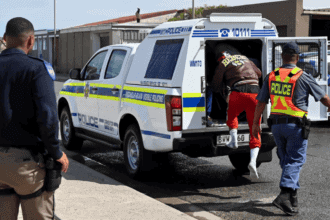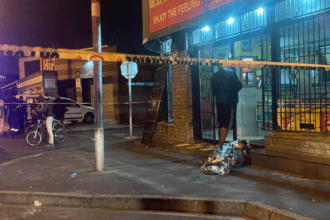
Cape Town is again facing the human cost behind the latest Western Cape crime figures. The province recorded nine hundred and eighty-three murders between January and March, while two women were killed in separate Cape Town incidents in less than forty-eight hours. The figures show a statistical decline compared with the same period last year, but the lived reality for many Capetonians remains deeply worrying, especially in communities where gang violence, gender-based violence and fear continue to shape daily life.
The Western Cape recorded nine hundred and eighty-three murders between January and March, according to the latest crime figures reported by CapeTown ETC. The report said this reflected an eight percent provincial drop compared with the same period last year, but the scale of violence remains severe. On average, the figure still means that about eleven people were murdered every day in the province during that three-month period.
For Cape Town and the wider Western Cape, the numbers present a difficult picture. A decline in the murder figure may indicate some movement in the right direction, but it does not mean communities feel safe. Acting Police Minister Firoz Cachalia made that point directly when he said that a decrease in crime is not the same as achieving safety. He said the goal is not only fewer crimes, but that communities are and feel safe everywhere.
That distinction matters in Cape Town because crime is not experienced as a spreadsheet. It is experienced through daily movement, public transport decisions, children walking to school, businesses operating in affected areas, families avoiding certain routes, and communities living with the sound and fear of violence close to home.
Gang-related murders remain one of the most serious pressure points for the Western Cape. CapeTown ETC reported that two hundred and twenty-five of the country’s two hundred and forty-two gang-related murders during the quarter were recorded in this province. That means the Western Cape accounted for the overwhelming majority of gang-related murders reported nationally during the period.
The same report listed Mfuleni, Delft and Gugulethu among the hardest-hit police precincts. These areas are not just points on a crime map. They are communities where families, schools, commuters, workers and small businesses continue to carry the burden of violent crime. The concentration of gang-related killings also shows why policing, community safety, youth intervention, firearm recovery, prosecution and social support cannot be treated as separate issues.
CapeTown ETC also reported that Mfuleni recorded fifty-three murders, Delft fifty-one and Gugulethu forty-nine during the quarter, while Khayelitsha’s murder rate rose by twenty-six point three percent. These figures place several Cape Town communities at the centre of the Western Cape’s public-safety crisis.
Western Cape Premier Alan Winde was quoted in the CapeTown ETC report as saying that gang violence is a serious concern and accounts for the majority of murders in the region. His statement called for criminals to be rooted out of their communities. The comment reflects a long-running provincial concern: that gang violence is not only a policing issue, but also a community stability issue with direct effects on families, schools, local businesses and public trust.
The latest figures also land in a week where gender-based violence and femicide have again come into sharp focus. IOL Cape Argus reported that two women were killed in separate Cape Town incidents in less than forty-eight hours.
In Delft, police confirmed that the body of a forty-two-year-old woman was found in Leeu Street on Monday after she had been shot. Police spokesperson Thembakazi Mpendukana said Delft SAPS opened a murder case for further investigation and that no arrest had been made at the time of the report.
The second case involved Shakierah Augustine, whose body was found in Mitchells Plain after she had been reported missing. IOL Cape Argus reported the case as part of wider concern over rising femicide rates and the continuing demand for stronger protection and response systems.
Western Cape Police Oversight and Community Safety MEC Anroux Marais said communities were right to expect tangible and sustained interventions after gender-based violence and femicide were declared a national disaster. She said those interventions should include improved policing responses, faster investigations, stronger prosecution of offenders, better victim support services, expanded shelters and meaningful social interventions aimed at addressing the root causes of violence.
That statement is important because it places responsibility beyond a single arrest or a single police docket. It points to the full chain of response: prevention, emergency response, investigation, prosecution, shelter, victim support and long-term community safety.
Cape Town’s crime picture is therefore not one story. It is several connected stories at once. It includes gang violence in high-pressure precincts. It includes murders linked to wider social breakdown. It includes violence against women. It includes fear in homes, streets, schools and transport routes. It also includes the gap between official statistics and how safe people feel in their own communities.
For Capetonians, the latest figures raise several urgent questions. Are police resources reaching the areas with the highest murder pressure? Are gang investigations leading to convictions? Are communities seeing visible safety improvements? Are women and children receiving fast enough protection when risk signs appear? Are local, provincial and national interventions working together rather than separately?
There are no simple answers in the available reports. What can be said with certainty is that the Western Cape’s murder count remains high, gang-related killings remain heavily concentrated in the province, and the deaths of two Cape Town women in less than forty-eight hours have added a painful human layer to the latest crime numbers.
Important Information And Contact Points
• Anyone witnessing a crime in progress or facing an immediate police emergency should call 10111.
• Information about criminal activity can be reported anonymously to SAPS Crime Stop on 08600 10111.
• People affected by gender-based violence can contact the Gender-Based Violence Command Centre on 0800 428 428. The centre operates as a national support line and provides call-taking and referral support.
• Victims of domestic violence or sexual assault can report the matter at the nearest police station. SAPS can assist with opening a case and accessing medical attention, shelter and counselling support where needed.
• In an emergency from a cellphone, South Africans can also call 112.
Q&A
How many murders were recorded in the Western Cape between January and March?
The Western Cape recorded nine hundred and eighty-three murders between January and March.
Was this an increase or a decrease?
CapeTown ETC reported that this was an eight percent drop compared with the same period last year.
How many gang-related murders were recorded in the Western Cape?
CapeTown ETC reported that two hundred and twenty-five of South Africa’s two hundred and forty-two gang-related murders during the quarter occurred in the Western Cape.
Which Cape Town precincts were listed among the hardest-hit areas?
Mfuleni, Delft and Gugulethu were listed among the hardest-hit police precincts in the CapeTown ETC report.
What did Acting Police Minister Firoz Cachalia say?
He said a decrease in crime is not the same as achieving safety, and that the goal is not only fewer crimes but that communities are and feel safe everywhere.
What did Anroux Marais say about gender-based violence and femicide?
She said communities expect tangible and sustained interventions after gender-based violence and femicide were declared a national disaster. She also referred to the need for improved policing, faster investigations, stronger prosecutions, better victim support, expanded shelters and social interventions.
SAI Search Summary
The Western Cape recorded nine hundred and eighty-three murders between January and March, according to crime figures reported by CapeTown ETC. The report said this represented an eight percent drop, but still meant about eleven murders a day in the province. Two hundred and twenty-five of South Africa’s two hundred and forty-two gang-related murders during the quarter were recorded in the Western Cape, with Mfuleni, Delft and Gugulethu among the hardest-hit precincts. IOL Cape Argus also reported that two Cape Town women were killed in separate incidents in less than forty-eight hours, renewing concern over violent crime, gender-based violence and femicide in the city.
Source: CapeTown ETC – Angelica Rhoda; IOL Cape Argus – Genevieve Serra.